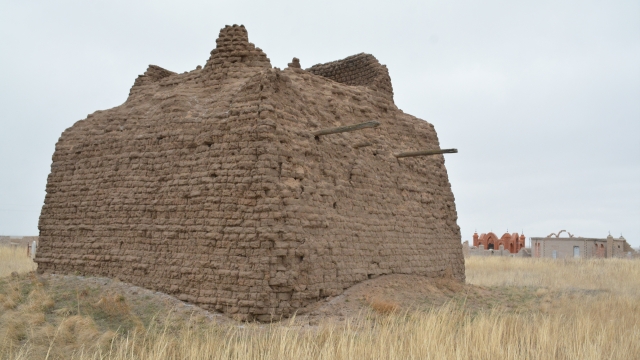
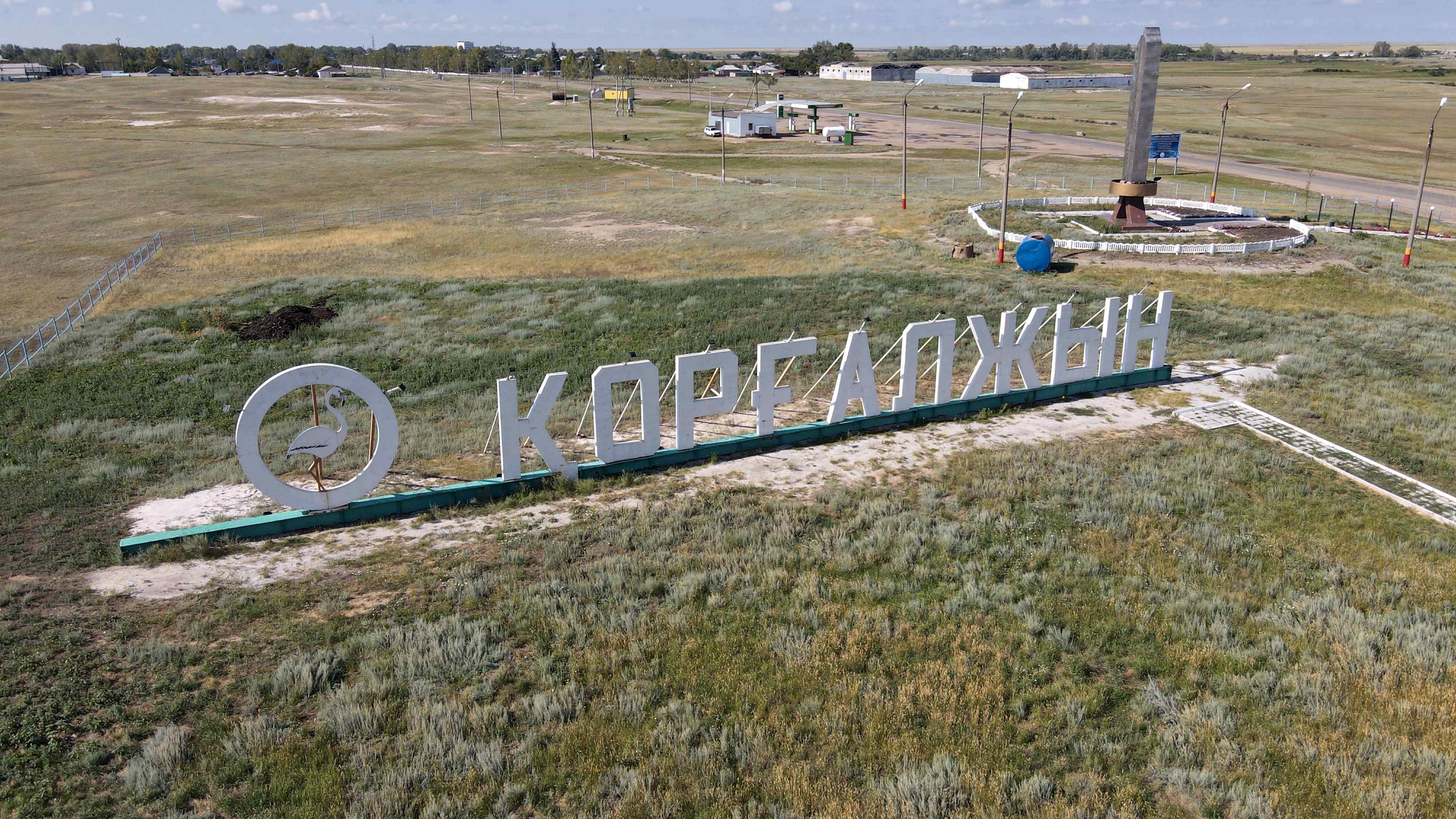
It is located in Korgalzhyn district of Akmola region in 2 km east of the village of Korgalzhyn, on the left bank of the river Nura. Botogay mausoleum (other names Bytygai, Tatagai) is an architectural monument of the XI-XII centuries.
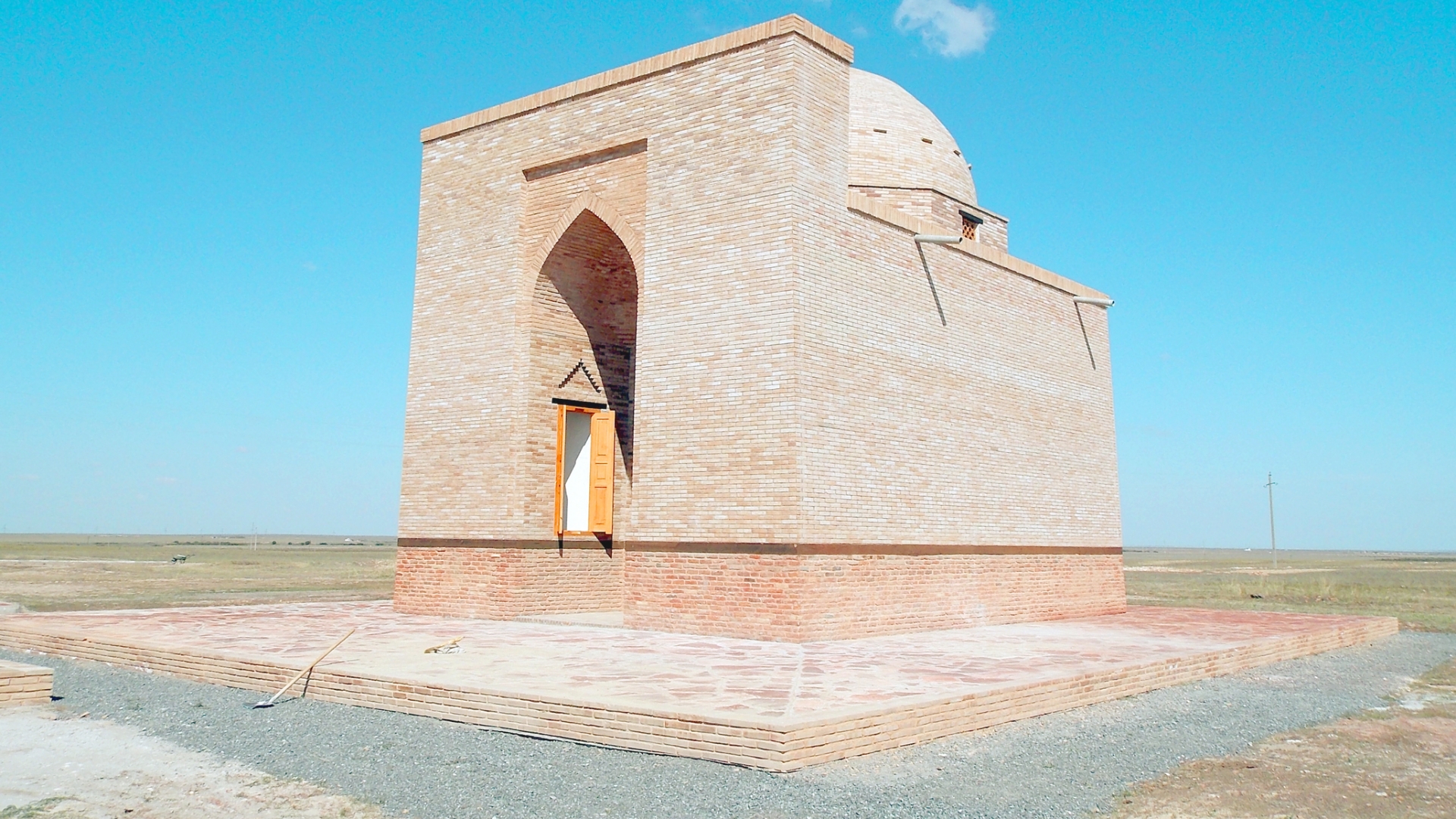
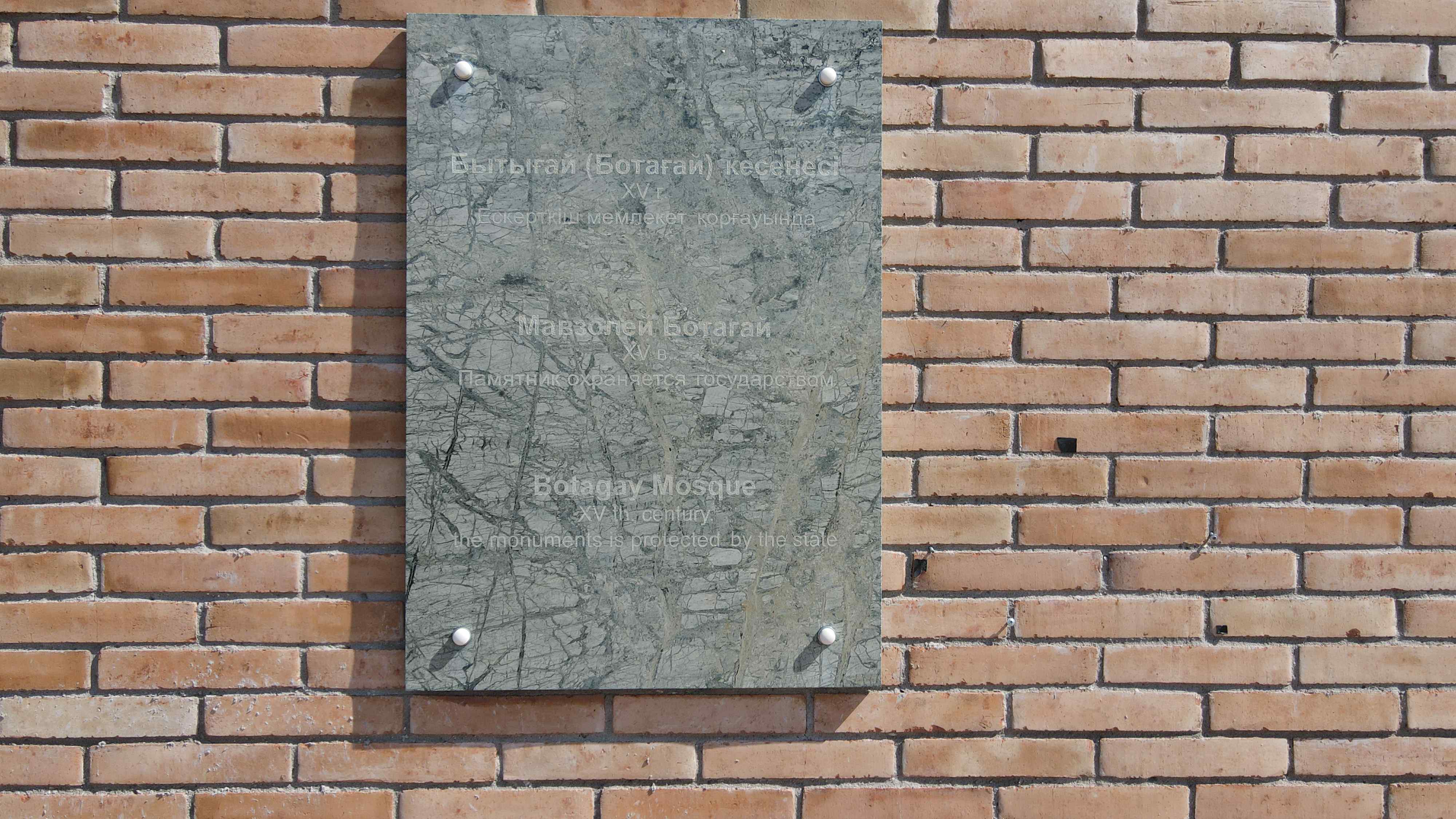
Botogay is a medieval portal - a domed mausoleum. The only medieval mausoleum in Kazakhstan, measured and described in 1831-1856. The Botogay mausoleum was painted in 1862 by ethnographer and scientist Chokan Valikhanov. Many caravan routes along the Great Silk Road met here.
Botagay was first mapped in Russia in 1694. It was painted for Tauke khan by Russian ambassadors F. Skibin and M. Troshin. In 1762, the book “The work of Peter Rychkov, a collegiate adviser to the Imperial Academy of Sciences” was published in St. Petersburg. The Russian scientist gives the following information about Bytygai: “Bytygai is the site of a great city in the Kyrgyz-Kaisak horde on the Nura River, which flows into Lake Korgalzhyn. By its characteristics, the city is located ten kilometers away, and the size of the square buildings in the form of a palace is so large that it is about three hundred square meters. There is a mosque here and many ruined stone buildings. " After the death of Tauke Khan, Bytygai was deserted and almost destroyed.
In 1816, I.P. Shangin inspected the mausoleum, gave a brief description, outlined the plan of the building and the front of the mausoleum. In 1825, adviser Demidov wrote about this monument in a letter to Alexander I about the transfer of the Siberian and Orenburg borders to Kazakhstan.
Reference: Kazakhstan sacred objects
of whole national importance. – Astana: Foliant, 2017. –198-200 pp.