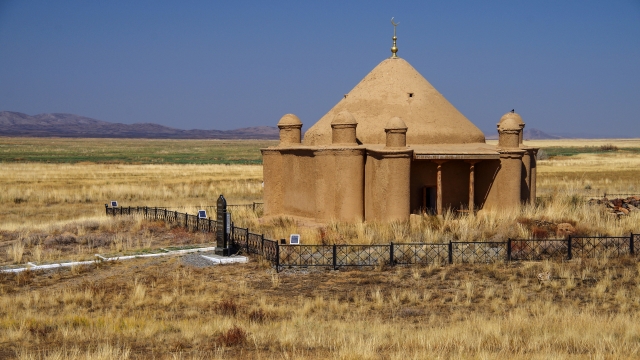
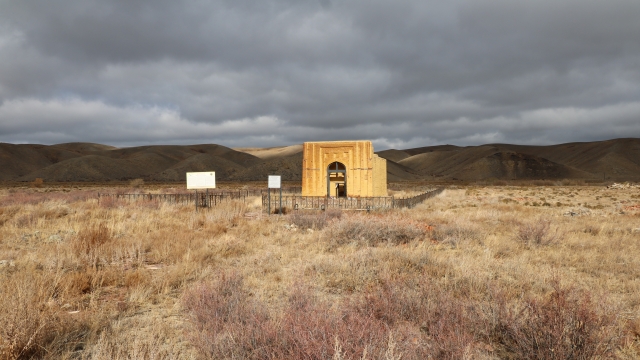
The monument is located 58 km northwest of Zhezkazgan, Ulytau district of Karaganda region, on the right bank of the river Karakengir. Chronological period: VIII-IX centuries. The Dombauyl monument was studied by the Central Kazakhstan archeological expedition led by Alkei Margulan in 1946-1947.
The mausoleum is built of stone slabs with a conical (pig-shaped) rectangular base with a height of more than 5 meters. Among the Kazakhs, stone mausoleums with domes resembling such yurts were called "uytas", "trunk". According to scholars, the Dombauyl mausoleum was built during the reign of the Huns. According to legend, this mausoleum was built in honor of the great composer and warrior Dombauyl, and its existence is associated with history and myth (fairy tale). According to the legends of the Kazakh people, Dombauyl is a hero from Naiman. It seems that Dombauyl was a reliable companion of Jochi khan, a palace sniper. This is because the tomb of Jochi Khan and the mausoleum of Dombauyl are very close. Dombauyldai glorified the name of the hero, his two sons - Ket-Buka and Kel-Buka - were daulesker kuishi. There are speculations that the author of the kui "Aksak Kulan" is Ket-Buka, the son of Dombauyl. When the famous historian Kurbangali Khalitovich described the formation of the "Eight Oguz", the name of the tribe with a negative connotation was Dombauyl.According to Serik Gabdullin, Dombauyl Batyr is said to be an influential man on the right knee of Genghis Khan. Genghis Khan, who appreciated Dombauyl and understood his qualities, joined him as a counselor to his eldest son Jochi. Dombauyl was Genghis Khan's sniper. Dombauyl was always with him when the khan built a hut and went hunting. Baiterek was a great sniper, a famous hero, a kuishi, a composer who played the dombra and kobyz.
Reference: Kazakhstan sacred objects
of whole national importance. – Astana: Foliant, 2017. –160-161-pp.