Sipatai Alibekuli (1781-1868) is a member of the Dulat tribe of the Great Zhuz. His father, Alibek, was a modest man, well-known in the region for sewing boots and weaving. But both Andas and Sipatai grow up to be proud and high-minded.According to the old people, Kenen Azerbayev described the image of Sipatai Batyr: He was eloquent and resourceful.
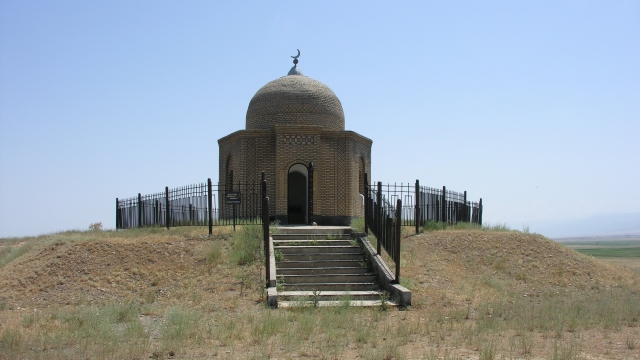
”Sipatai Batyr did not give his land to the enemy, he did not rest day and night in winter and summer, he returned the cattle and buried the enemy. He did not bring any enemies from Karabalta to Turkestan, which fell to Dulat in 1806, he himself attacked and resisted the enemies of his country. Sipatai Batyr did not turn away from the fierce khans. He said to Kenesary, who showed his heart at the first meeting: There is a child, and the father can take revenge - beheading or wounds. “At that time, Sipatai batyr had three crossroads. One is the way to the Kokand Khanate, the other is the way to join the Kenesary movement against Russian colonialism, and the third is the way to submit to Russia and move forward. In 1847, Sipatai, along with a number of Semirechye sultans and bi, swore an oath of allegiance to Russia. The mausoleum is located to the east of Sypatai aul of Merke district.
References: 1.Regional sacred sites of Kazakhstan. –Astana: Foliant, 2017. –225 p;
- The sacred Kazakhstan. Volume 3 –Astana, 2019. –80 p.