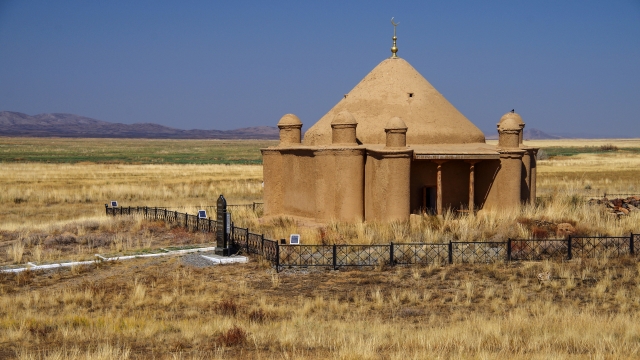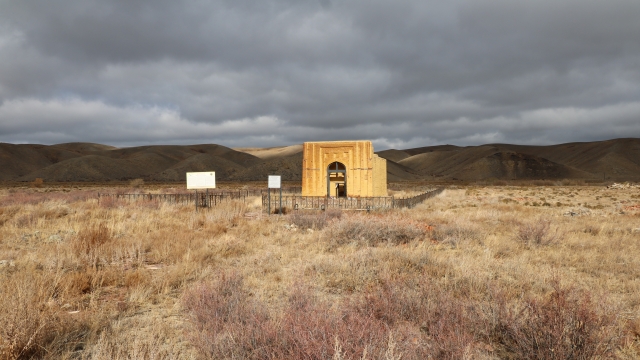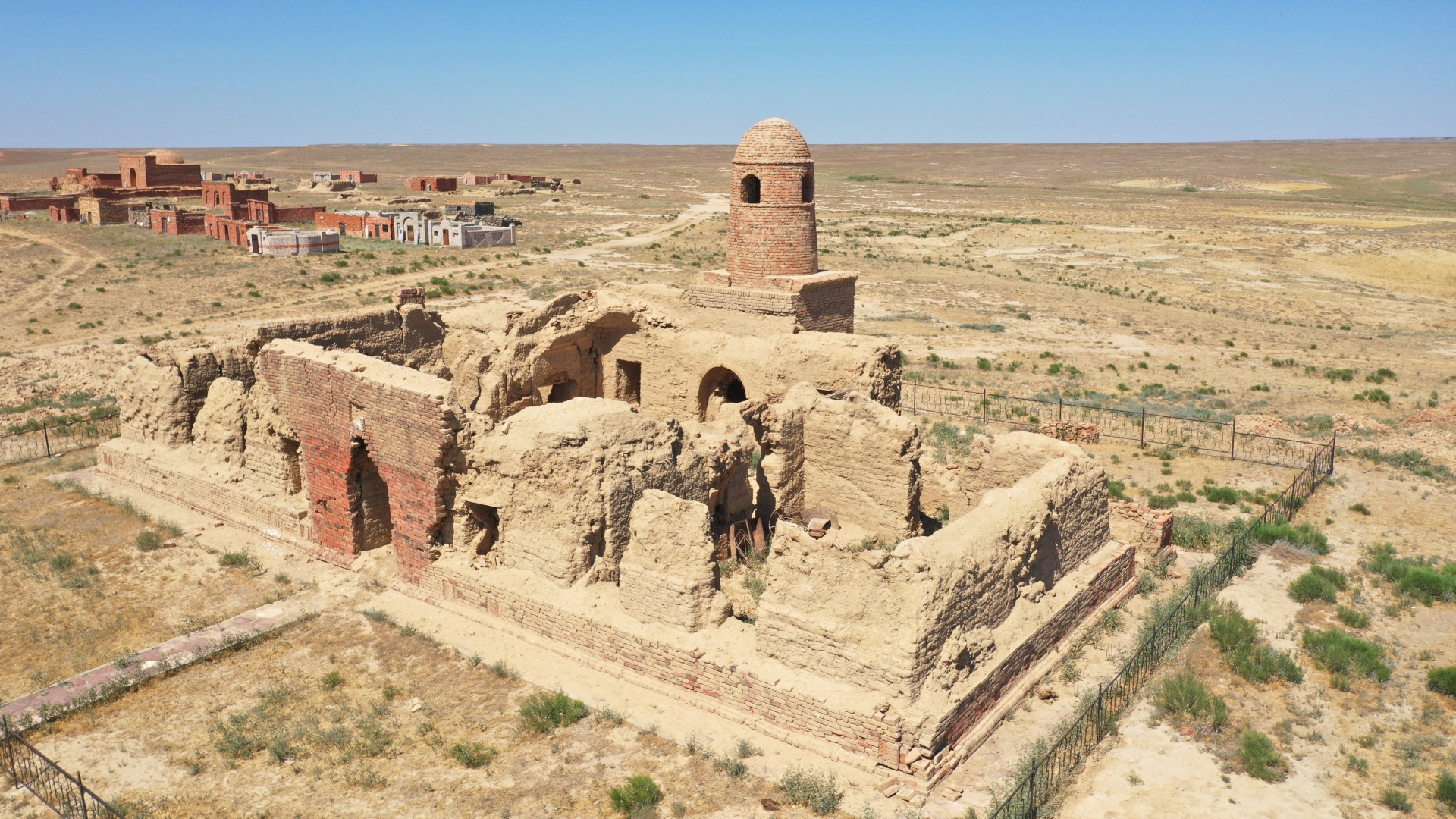
Dulygaly mosque is located in Ulytau district of Karaganda region, on the river Ashyly, 135 km from the village of Karsakpay. The mosque-madrasah, consisting of 24 rooms with a red brick exterior, was built by Kulmukhambet Arystanbayuli (about 1902-1906), who lived along the Dulygaly and Ashly rivers.Kulmukhambet Arystanbayuli Ishan was a very religious and talented person.
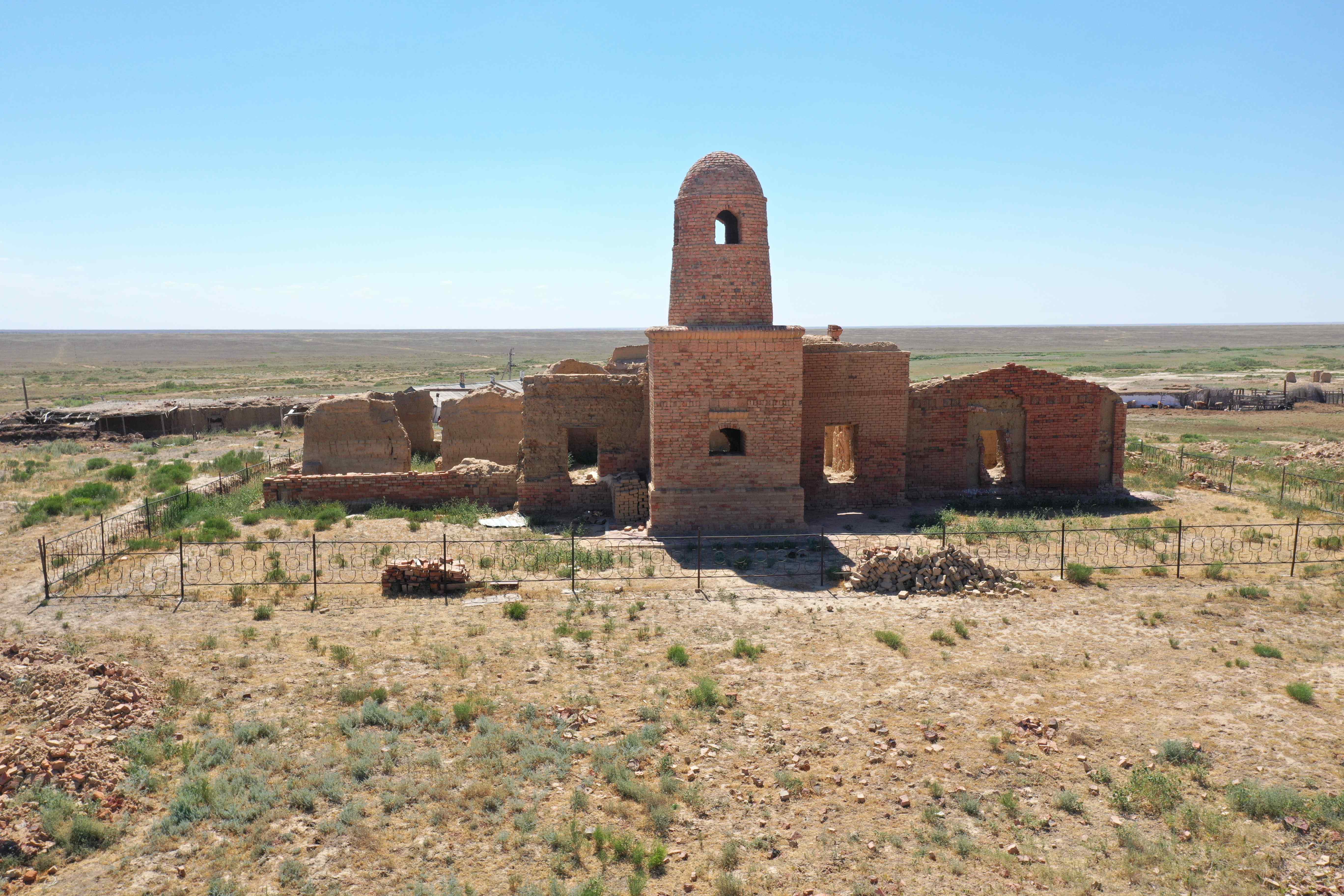
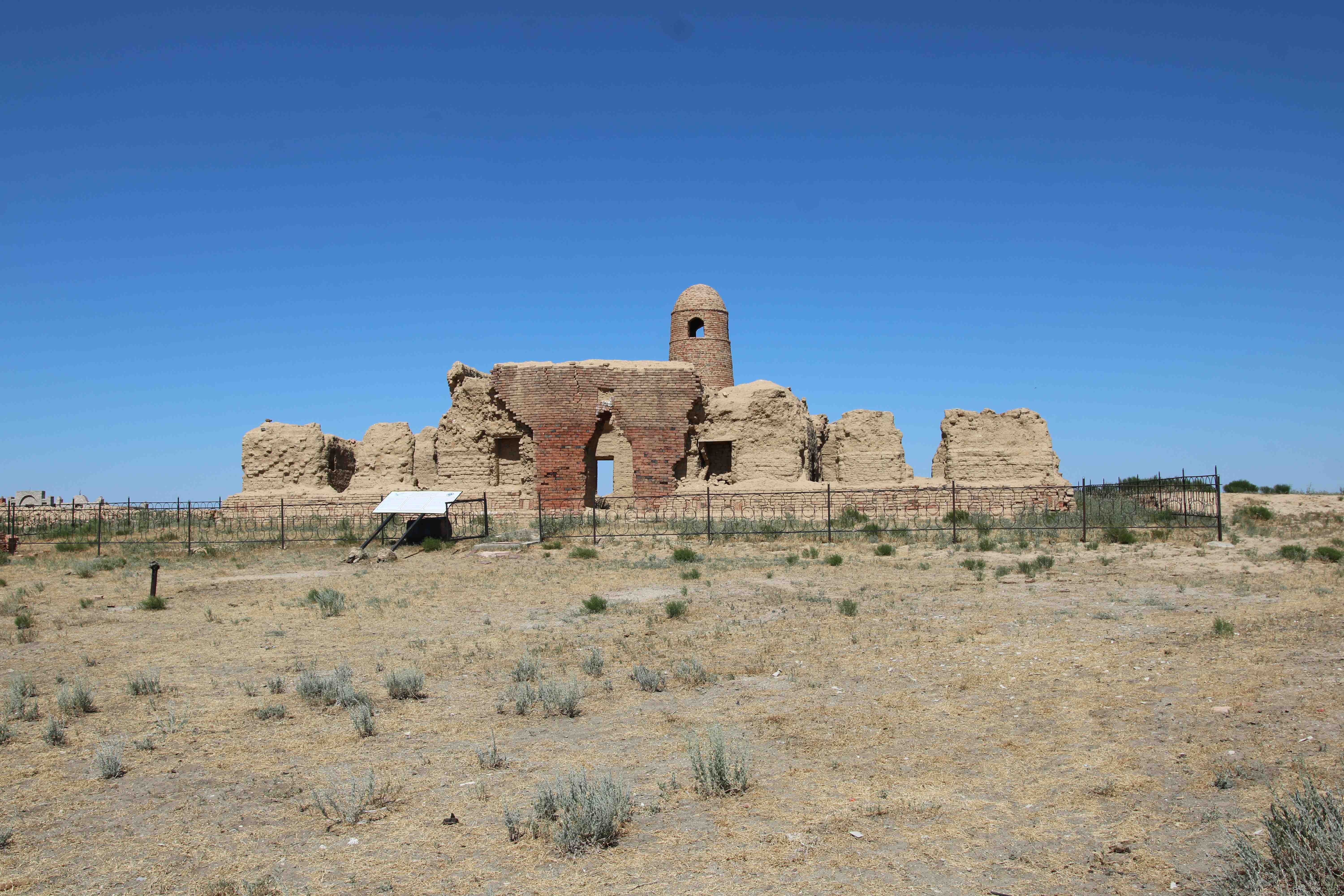
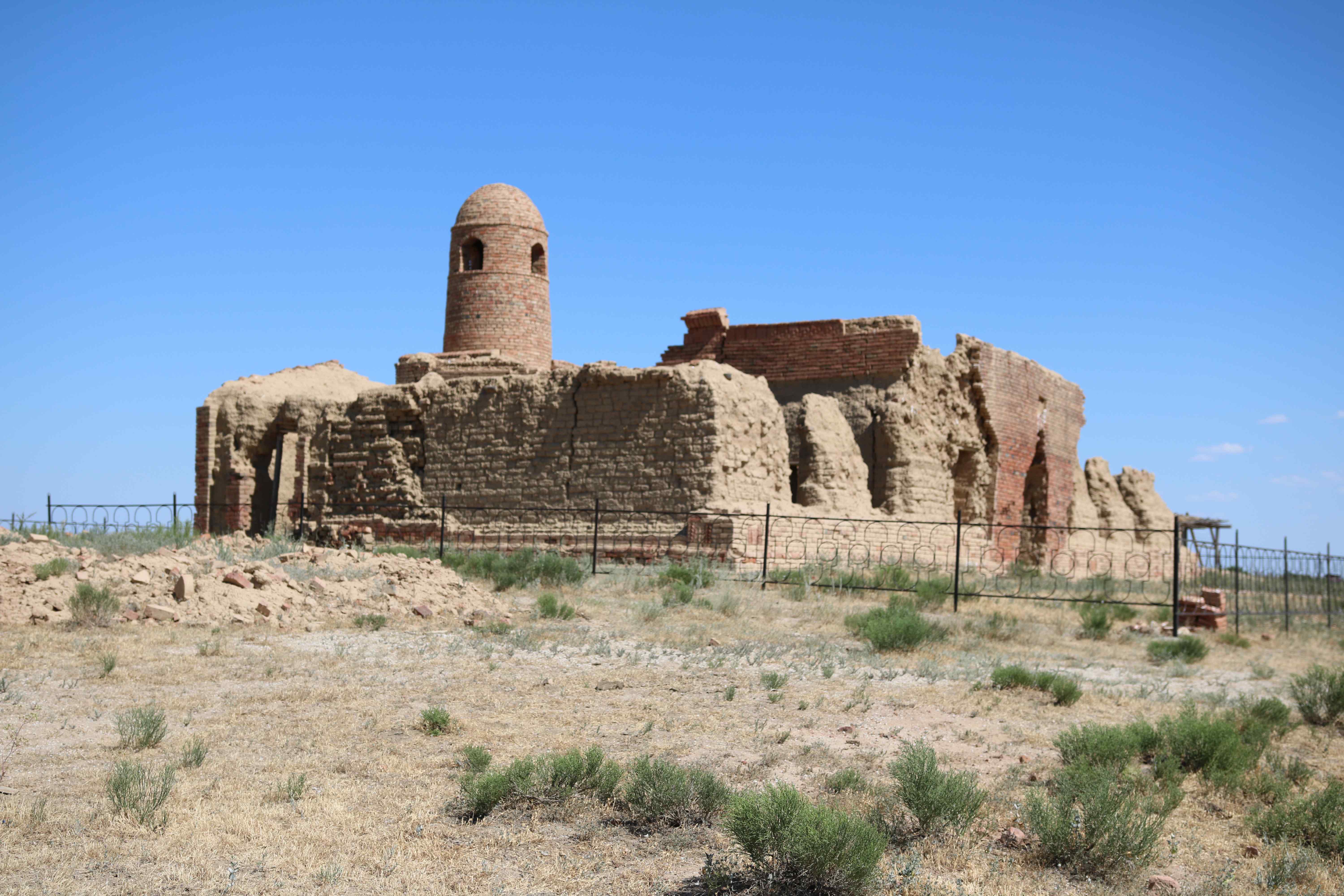
His father sent him to study in Bukhara and Samarkand to learn Arabic at a young age. From there he receives a letter on the level of Quran and Ishan. He works in a mosque in the largest center of the country and gains experience. He also specialized in medicine, jewelry, carpentry, construction. Seeking to teach the art of collecting abroad, he returned to the country only sixteen years later. Ishan built mosques and madrassas in the country, taught children and helped to open the religious literacy of the people.The master who built the mosque was Berdykei Talpak. The project of the mosque was designed by Kulmukhambet Ishan with 9 domes on the model of Bukhara. He took part in the casting of each brick, painted Arabic inscriptions on it and decorated it with ornaments. Ishan had been cutting the mold for three years. He also took part in the construction of a kiln. As soon as the mold was ready, it was immediately poured into pieces and baked. After the mosque, a 24-room madrasah will be built. The roofing timber and floorboards were transported from Aman-Karagai and Nauryz by a bullock cart. Construction was completed in 1920. Until then, children studied in the mosque. A specially invited Tatar named Galiulla teaches Russian. When the national liberation uprising broke out in 1916, rebel members of the Kipchak tribe reportedly gathered here and made plans for the future.From 1937 to 1938, the mosque was kept in good condition, and then the bricks were taken to the collective farm. Kulmukhambet Ishan probably died before 1916. His successors were Abdrakhman Ishan and Birmagambet Ishan.
References: 1. Regional sacred sites of Kazakhstan. –Astana: Foliant, 2017. –253 p; 2. The sacred Kazakhstan. Volume 3 –Astana, 2019. –136 p.