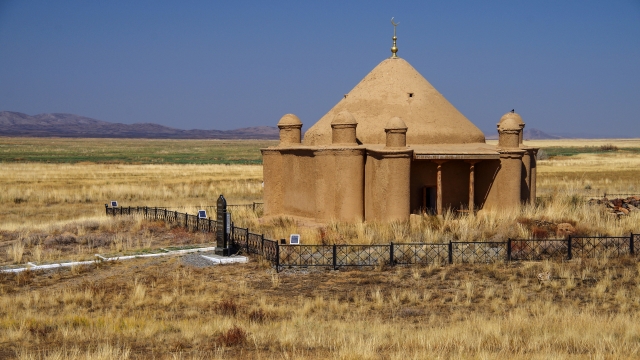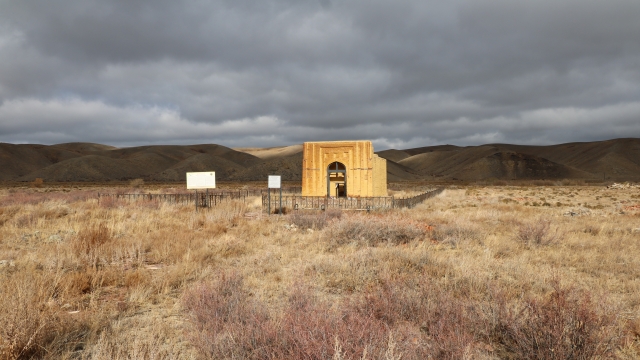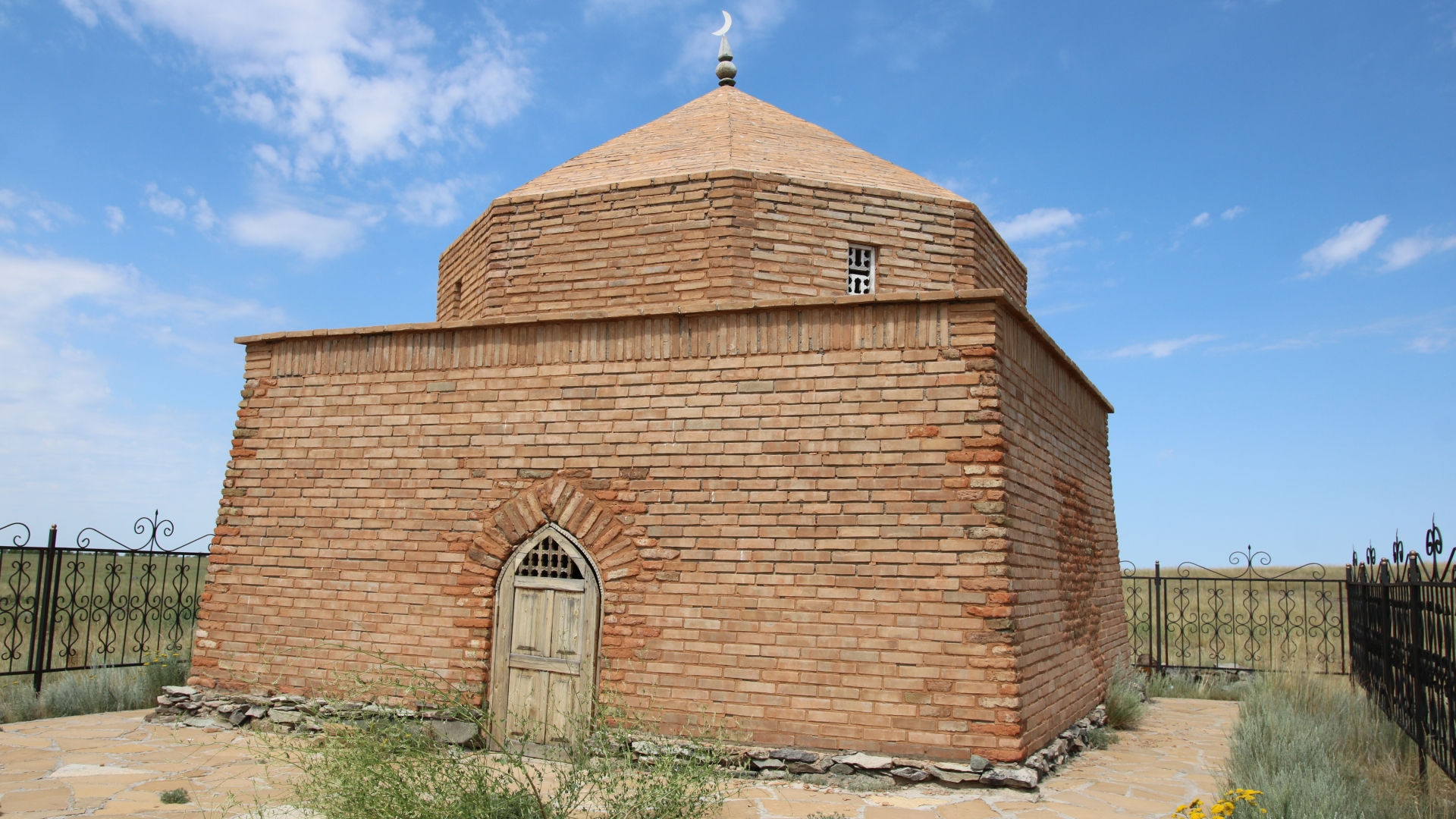
Zhanaarka district of Karaganda region is an architectural monument of the XI century, located on a hill on the right bank of the river Sarysu, 2 km northeast of the 189th railroads passing track.There are several historical legends about the mausoleum of Zhuban Ana.
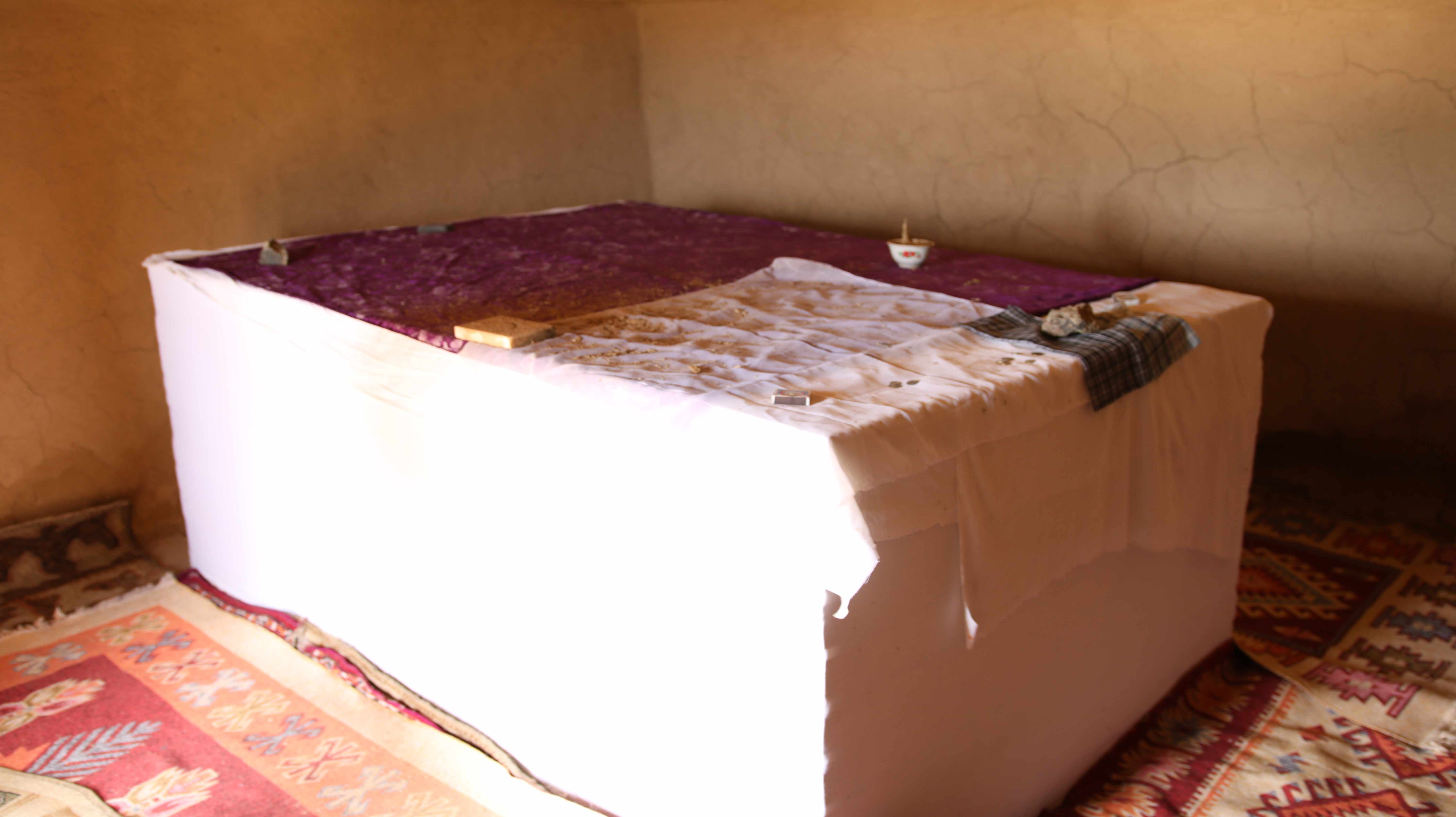
First of all, this mausoleum has been revered as a "holy tomb" since the Middle Ages. According to historical legends, Talmas Ata lived on the Sarysu River during the Golden Horde. Talmas Ata probably had Zhelmaya's camel. On the first day, he stopped at Zhuban ana mausoleum, and then along the Sarysu he greeted the mothers Bolgan and Belen. Zhelmaya camel is blowing in the wind on the shores of Zhetykonyr sand and Sarysu. The mausoleum has been revered by the people until recently. A passenger landed on his head and came to visit the goddess to ask for a child. It is a dome, four- and octagonal single-chamber construction. The mausoleum is made of baked bricks 27x27x6 cm. The main weight-bearing structure of the monument is made of burnt and untreated bricks. The first written record of the mausoleum of Zhuban Ana was found in published in 1762 work of P.I. Rychkov's "Topography of Orenburg". He was the first to photograph the project and paint the mausoleum in 1863. It is known that it was Chokan Valikhanov. In 1946, the mausoleum was studied by the Central-Kazakhstan archeological expedition of the Academy of Sciences of the Kazakh SSR (A.H. Margulan). In 1974, the expedition of the Ministry of the Kazakh SSR measured the monument and fixed the picture.
Reference: Kazakhstan sacred objects
of whole national importance. – Astana: Foliant, 2017. –173-174 pp.