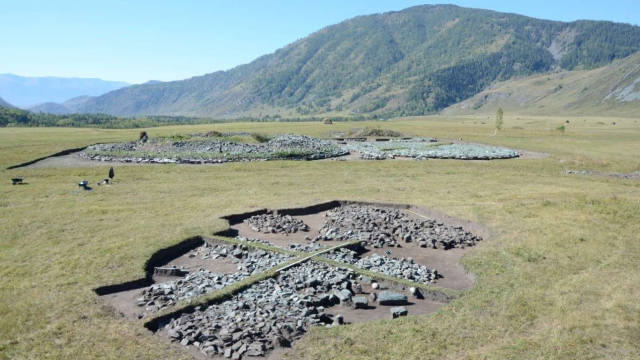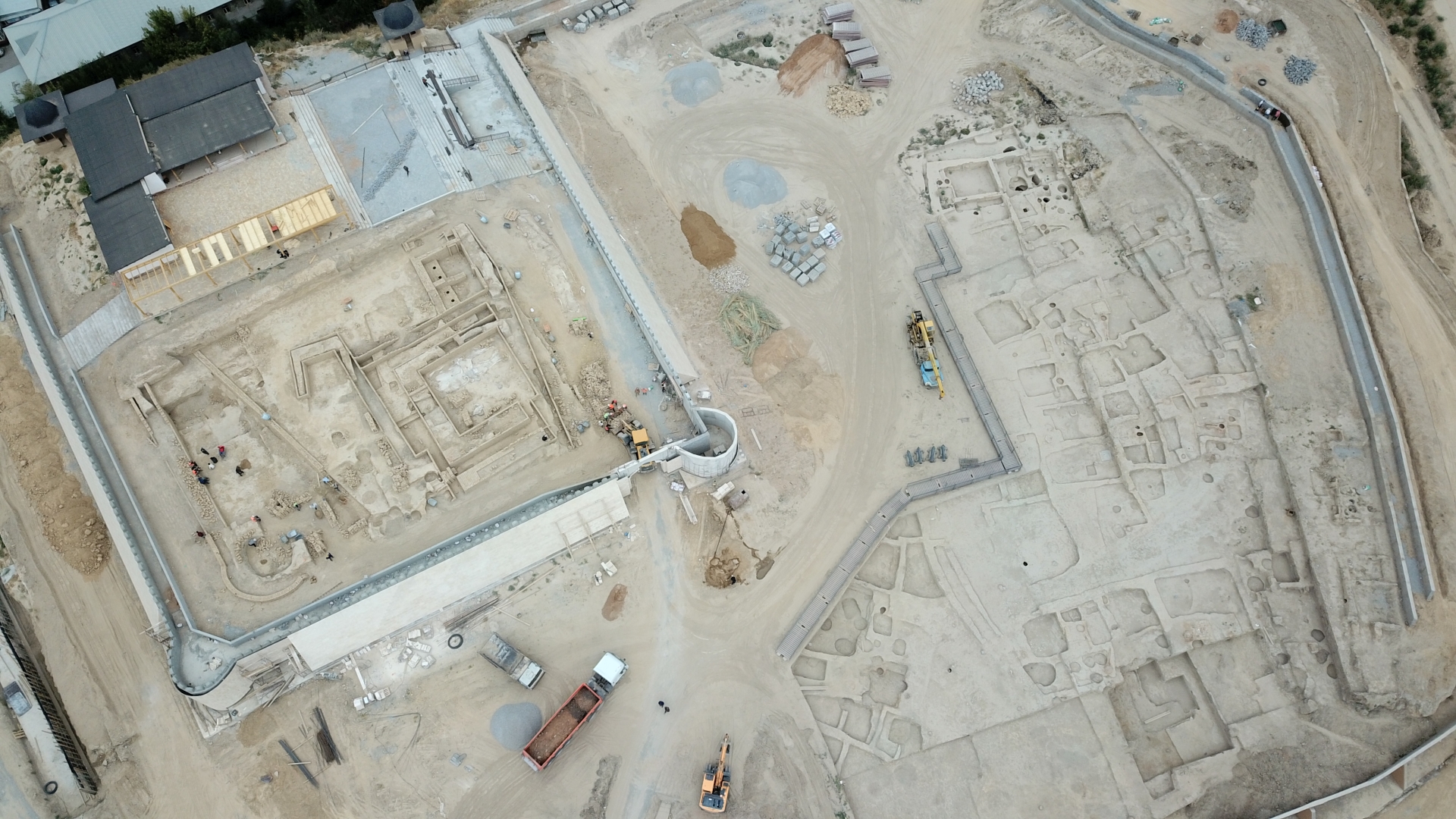
It is located in the southern part of Shymkent on a high place between the rivers Badam and Koshkar-Ata.Chronological period: BC II-I centuries. The word Shymkent (Turkish shym - valley, cavern, village - Iranian settlement) means a green city. Bronze arrows and daggers made by Saka tribes were found in Shymkent. Saka descendants - in I thousand years BC, Kangyuis were able to create a very powerful state Kangyu (Kanly).There were several settlements on the territory of Shymkent.Shymkent is first mentioned as a settlement in the book “Zafar Name” (“Book of Victory”) written by the Persian historian Sharaf ad-Din Ali Yazdi (1425) about the military campaigns of Timur in 1365-1366. Until now, most scholars have speculated that the settlements on the territory of modern Shymkent existed in the XI-XII centuries. During the archeological excavations by archeologist Baurzhan Baitanaev, a doctor of sciences from Shymkent, B.D. revaled pottery dating back to the II century BC. These artifacts are the reason for the assumption that Shymkent is 2200 years old. In addition, the historian-scientist, studying the writings of the Chinese monk Sima Qian, who traveled through Central Asia in 629, suggests that the medieval name of Shymkent may be Nezhiket (meaning “new city” in Arabic). This is confirmed by other historical data. For example, one of the most prosperous cities along the Great Silk Road at that time was called Nejiket, one of the gates of Ispidzhab (Sairam). Later it was called “Shymkent Gate”. After the Mongol era, Shymkent became a large city. Its remains are a well-preserved fortress of the old city in the center of the city. The shape of the castle is arc-shaped, 25 m above the ground. The size of the arch is 30-45 m, there are towers in the corners, the entrance gate is on the wall on the south side. Philip Nazarov, a translator from the Siberian branch, said: “... The fortress is built on a high hill along the Badam River (city) and is surrounded by a high wall. There is no other way but to enter the city on a narrow road that can only be crossed by a horse on the river. Water enters the city through windows carved into the walls and fills the canals dug in the city, some of which are equipped with water mills. The houses are made of baked bricks and have no windows. For some reason, the doors are open everywhere to let the light into the house, ” - he said.
Reference: Kazakhstan sacred objects
of whole national importance. – Astana: Foliant, 2017. –381-p.